

Blog
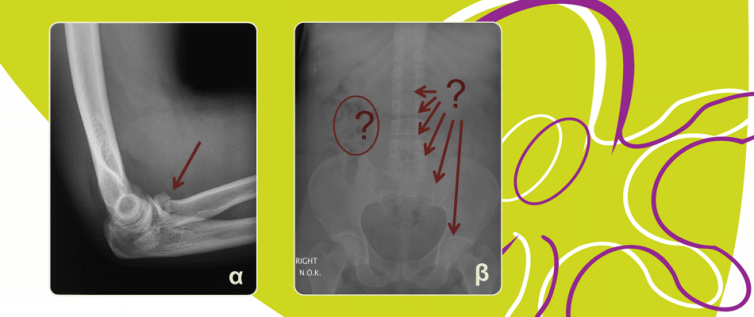
Spyros fell off his bicycle and injured his right elbow. The severe and persistent pain led him to the hospital, where radiographic examination (Fig. A) revealed a fracture of the radial head. He was advised to undergo conservative management with immobilization, analgesics, and physiotherapy after a period of 6 weeks. If the joint range of motion is gradually restored, surgical stabilization can be avoided.
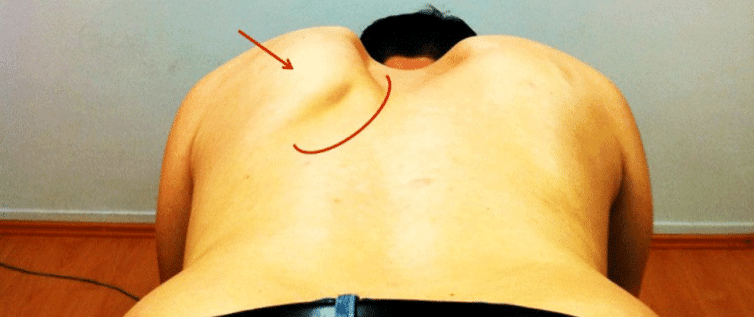
The young computer programmer reports pain in the region of his left elbow. He plays high-level tennis 4–5 times per week, after working 10–12 hours a day, despite a physique that does not obviously suggest such athletic demands. The patient’s history does not strongly support a classic case of tennis elbow, and clinical reasoning shifts the suspected cause away from the local area of symptoms. Could poor control of the left scapula be responsible for the dysfunction of the elbow?
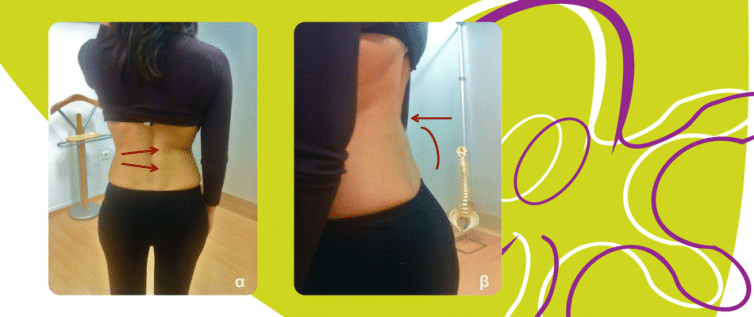
Dietetics is the science that studies proper nutrition, and the young scientist appears to be well acquainted with it. What she may not be aware of, however, is that her lumbar spine struggles to maintain a neutral position. This is evidenced by the markedly hypertonic paraspinal muscles of her trunk (Fig. A) and the flexed position (+X) in which the local vertebrae find a stabilizing refuge (Fig. B). Physiotherapy, which addresses such issues, must now consider whether the young woman can continue participating in CrossFit and swimming—activities she is particularly passionate about.
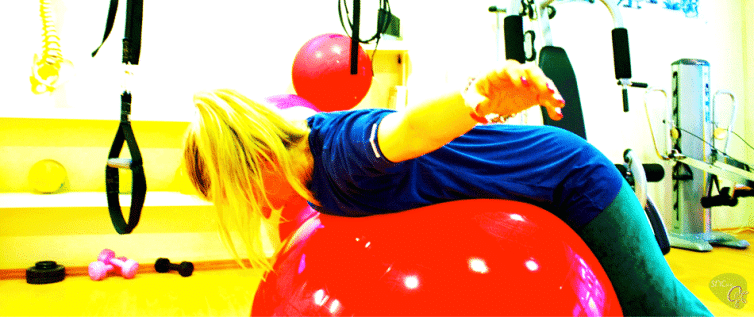
The work of an esthetician is physically demanding, often requiring prolonged maintenance of extreme postures of the trunk and upper body. As a result, neck and upper back pain are common and often unavoidable. The solution lies in learning to use the body more efficiently. The patient is learning to improve motor control of the cervical region by maintaining her head in a proper neutral position without compensatory movements. At the same time, she is strengthening her core muscles and learning to use her upper limbs more effectively, avoiding the tendency to pull her head and thoracic spine into extreme positions. These skills will prove invaluable in her daily work routine.
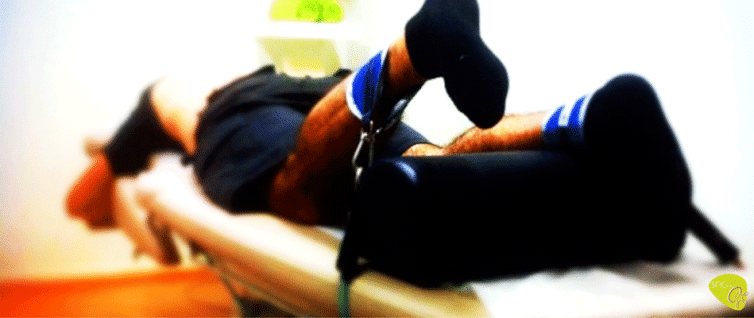
The long-distance runner presented with an impingement syndrome at the L3–L4 level (PA) in the direction of extension (–X), resulting from functional instability of the lumbopelvic region. After successfully managing the pain during the acute phase and fully restoring mobility to the affected area, he gradually returned to his running activities. He is now in the process of modifying the movement pattern of the affected region, aiming to improve lumbar motor control and reduce the risk of re-injury.

Because the brain “reads” the stories of everyday life and adapts according to how they unfold, at Totalmanual Physio & Fitness Studio we focus on reshaping the narratives behind these stories in order to help manage our patients’ pain. We use every available method that enables patients to experience pain-free movement patterns, ultimately guiding their recovery journey toward a happy ending. Wii Fitness is one of our most valuable allies in this process.